
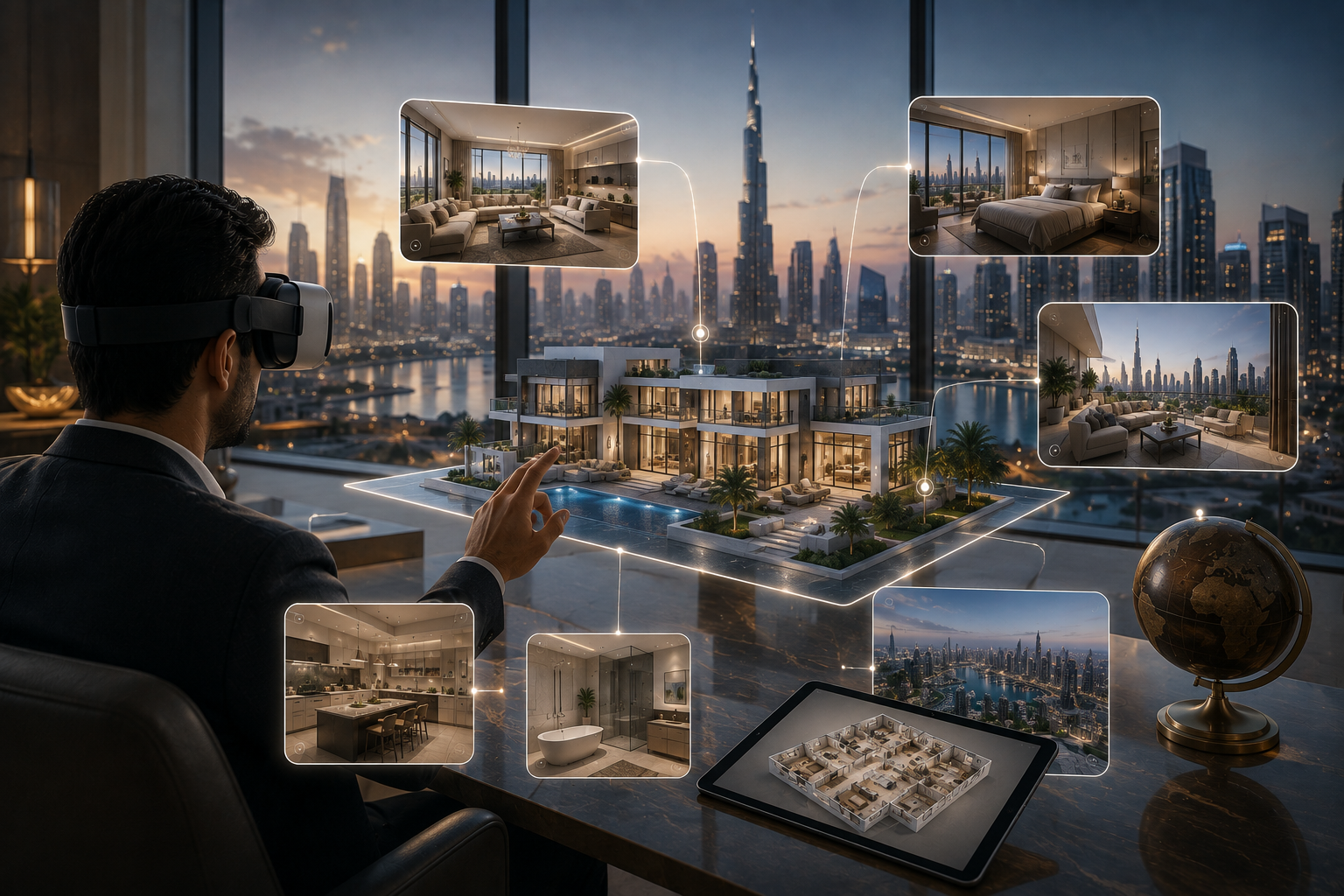
A growing share of property buyers today will never set foot in the country before they sign. They’re evaluating a project from another city, another time zone, sometimes another continent entirely, and making a six or seven figure decision based almost entirely on what they see on a screen. That shift has quietly rewritten what a “good” virtual tour needs to deliver. A few polished stills and a slow pan around the lobby doesn’t cut it anymore. International buyers have gotten more discerning, and their expectations in 2026 look very different from what worked even a couple of years ago.
They Want to Explore, Not Just Watch
The biggest shift is control. Buyers no longer want a passive video walkthrough where someone else decides which rooms to show and for how long. They want to move through a space at their own pace, linger in the kitchen if that’s what matters to them, skip past a hallway they don’t care about, and revisit the balcony view a second time before making up their mind. A tour that only offers one fixed path feels dated and, worse, makes buyers suspicious about what isn’t being shown. Working with an experienced architectural visualization company in dubai developers rely on is often the difference between a tour that feels like a sales pitch and one that feels like an honest walkthrough.
Accuracy Has Become Non-Negotiable
International buyers can’t cross-check a virtual tour against reality in person, which means the pressure to get every detail right falls entirely on the visualization itself. Proportions need to match the actual floor plan. Material finishes need to reflect what will genuinely be installed, not an idealized version. Lighting needs to look believable rather than artificially staged. Buyers who’ve been burned before, by a unit that looked nothing like its marketing render, are far more cautious now, and they’ve gotten better at spotting renders that oversell. Trust, once lost at this stage, is difficult to rebuild.
Exterior Context Matters as Much as the Unit Itself
Buyers evaluating from abroad aren’t just picturing their apartment. They’re picturing the building, the street, the neighborhood, and how all of it fits into their decision to invest somewhere they may not visit for months. A tour that jumps straight into the unit without establishing that broader context leaves a gap in the buyer’s understanding of what they’re actually purchasing into. This is why strong exterior rendering services matter just as much as the interior experience, giving buyers a sense of scale, surroundings, and design language before they ever step inside virtually.
Emotional Connection, Not Just Information
There’s a practical layer to what buyers want, accurate layouts, correct dimensions, believable materials, but there’s also an emotional one that’s easy to underestimate. Buyers are trying to picture a life, not just a floor plan. Morning light through the living room windows, the view from the balcony at sunset, how the kitchen feels during a family gathering. A tour produced by a skilled 3d interior rendering company captures these details in a way that flat renders or basic 360 photos simply can’t, and that emotional pull often matters as much as the technical accuracy in pushing a hesitant buyer toward a decision.
Mobile-First, No Exceptions
A tour that only works well on desktop is quietly losing buyers. International investors are often reviewing properties on their phones between meetings, during a commute, or late at night in a different time zone than the sales team. If a virtual tour loads slowly, doesn’t adapt to a smaller screen, or requires a plugin most people won’t bother installing, it gets abandoned before it does its job. In 2026, mobile performance isn’t an afterthought, it’s a baseline requirement.
The Bigger Picture
What international buyers expect in 2026 isn’t really about flashier technology for its own sake. It’s about closing the trust gap that comes from buying something they can’t physically inspect. The tours that succeed are the ones that feel accurate, explorable, and emotionally convincing all at once, giving a remote buyer enough confidence to commit without ever having walked through the door.