
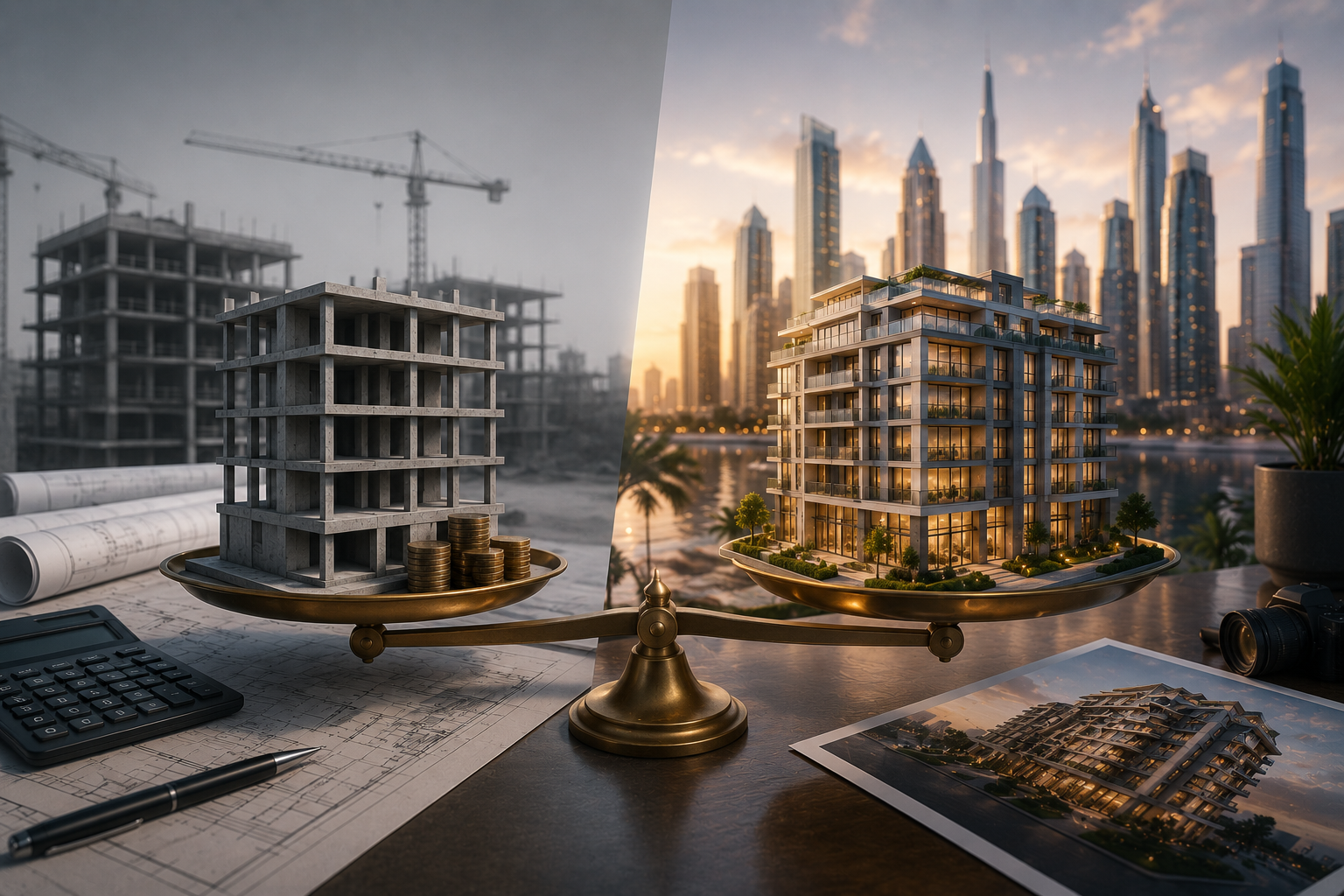
At some point in every project’s marketing budget, someone asks whether 3D rendering is really worth the spend. It’s a reasonable question. Rendering isn’t free, and for developers used to measuring return in signed contracts, not polished visuals, it can look like an easy place to trim costs when timelines tighten. But talk to developers who’ve launched more than one project, and most will tell you the same thing: skimping on rendering rarely saves money in the long run. It just moves the cost somewhere else, usually into slower sales or a project that fails to stand out.
Rendering Isn’t Decoration, It’s Sales Infrastructure
The mistake is treating rendering as something that makes a brochure look nicer. In practice, it’s one of the few tools a developer has to sell something that doesn’t physically exist yet. Off-plan sales depend almost entirely on a buyer’s ability to trust an image, and that trust either gets built by strong, accurate visuals or it doesn’t get built at all. Working with a capable architectural visualization company dubai developers already trust means those visuals are doing real work at every stage, from the first social ad to the final walkthrough before signing.
Where the Return Actually Shows Up
The ROI on rendering doesn’t show up as one clean number on a spreadsheet, but it shows up consistently in a few places. Faster presales is one. Projects with strong early visuals convert interest into reservations faster, simply because buyers spend less time guessing and more time deciding. Reduced friction in the sales process is another. Every question a good render answers upfront is one less objection a sales team has to handle manually, and across dozens of units, that adds up quickly.
There’s also a quieter benefit: catching design issues early. A layout problem spotted in a render costs very little to fix. The same problem discovered after construction has started costs considerably more. Developers who lean on visualization early sometimes save more in avoided rework than they ever spent producing the renders in the first place.
Getting the Exterior Right First
Most marketing budgets naturally lean toward exteriors first, and for good reason. The facade is what appears in ads, on the website, and on site hoarding long before anyone can see inside a unit. Investing properly in exterior rendering services isn’t just about one hero image either, it covers the range of angles and lighting scenarios needed to keep a campaign looking consistent across every channel a buyer might encounter the project on.
Why Interiors Deserve Equal Attention
Where developers sometimes underinvest is on the interior side, treating it as secondary once the exterior is locked in. That’s a mistake, because interiors are where buyers form the emotional connection that actually closes deals. They want to picture their own life in the space, not just admire the building from outside. A skilled 3d interior rendering company brings that connection to life through material accuracy, lighting, and layout detail that generic renders tend to miss, and that emotional pull often matters just as much as the exterior in moving a hesitant buyer toward a decision.
So, Is It Worth It?
Framed this way, 3D rendering isn’t really an optional expense to negotiate down. It’s an investment that needs to be allocated properly across the buyer journey, from the first impression to the final decision. Developers who under-invest in it tend to pay for the shortfall later, in slower sales cycles, weaker buyer confidence, or costly changes discovered too late. Those who treat rendering as core sales infrastructure rather than a design add-on consistently see it pay off exactly where it counts, in how quickly genuine interest turns into a signed reservation.